
Stamp Design Bloopers
Pt. 1 - Olympic Events That Aren't

Most collectors, if they use the word “fun” to describe stamp collecting, are probably referring to the hobby as an interesting and pleasurable pastime. I have a few topical collections which I pursue. My two main topics are Fiction Writers & Literature and Classical Music on stamps, both of which I would describe as fun in this sense.
However, another topical interest of mine is design errors (or bloopers) on stamps. These are not errors introduced during the printing process, such as with the inverted Jenny, but ones that originate at the very beginning of the stamp production process, with the artist’s design. This topic I describe as fun because it also provides grins and giggles.
Stamps issued for the Olympics are a treasure trove of design bloopers — too many to cover in one post, so I will break them down into categories and write up separate posts on them. In this post, I will go over stamps that depict sports that have either never been included in the Olympics, or which were not included in the games for the year being commemorated.
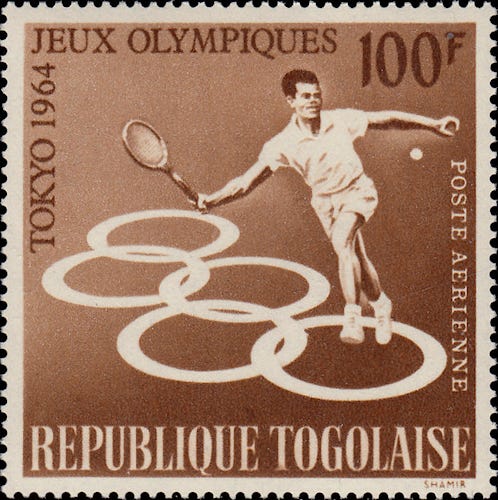
Tennis has had an on-again off-again relationship with the Olympics since the first modern games were held in 1896. Tennis was included as an Olympic sport from 1896 through the 1924 games. However a dispute between the International Lawn Tennis Federation and the International Olympic Committee over what constituted “amateur” status led to the sport being dropped.
Tennis, despite Togo’s belief that it was part of Tokyo’s 1964 games, did not return to the Olympics until 1968 (and again in 1984), and then only as an exhibition sport. Tennis regained its status as an official medal sport in 1988.
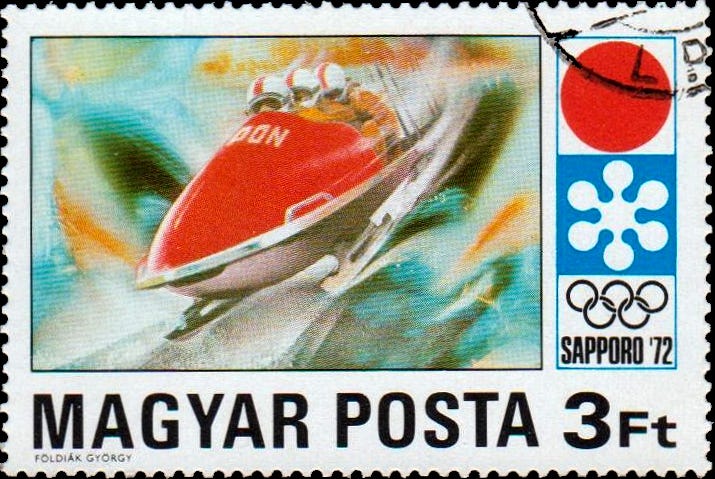
It seems the stamp artist couldn’t decide whether to depict the 2-man or the 4-man bobsled. So he splilt the difference and gave us a 3-man bobsled.
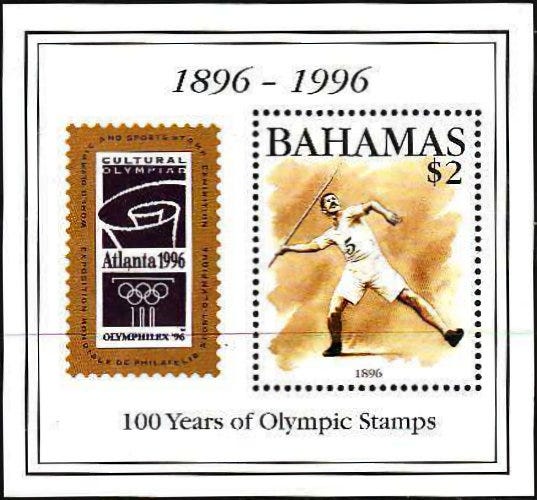
In 1996, to celebrate the centenary of the modern Olympics and Olympic stamps, the Bahamas issued this souvenir sheet with a stamp with a throwback design, depicting a javelin thrower from the 1896 Olympics. Only problem is, the javelin throw did not enter the Olympic arena until 1908, in London.
Incidentally, while the official name of the Bahamas includes the definite article, and most official government documents include it, “The” Bahamas has never appeared on a postage stamp.
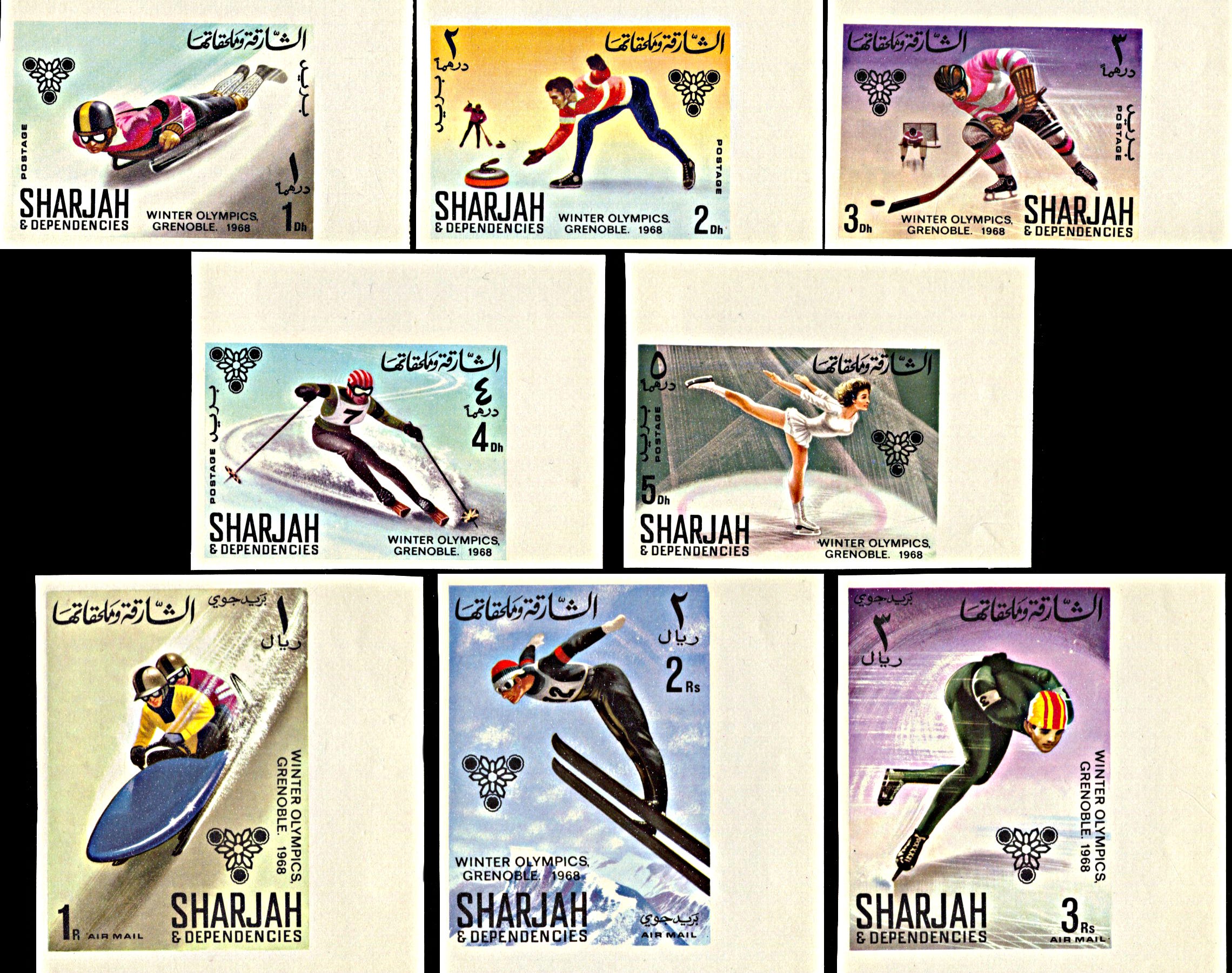
In 1968, Sharjah (or whatever agency held their stamp production contract) issued a set of 8 stamps depicting 8 Winter Olympic events. Or should that be 6?
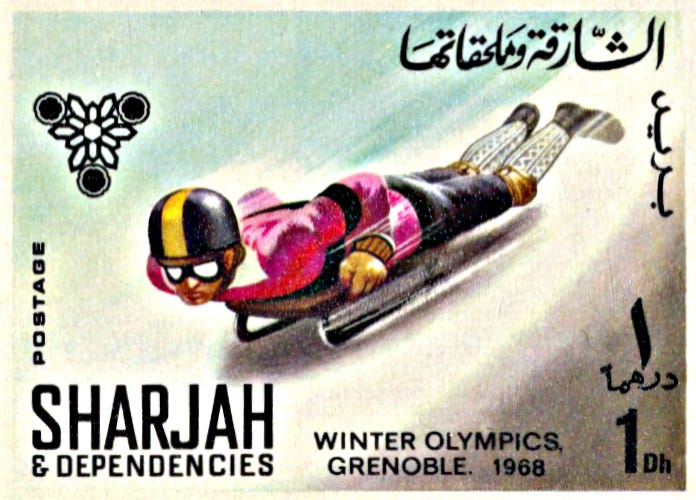
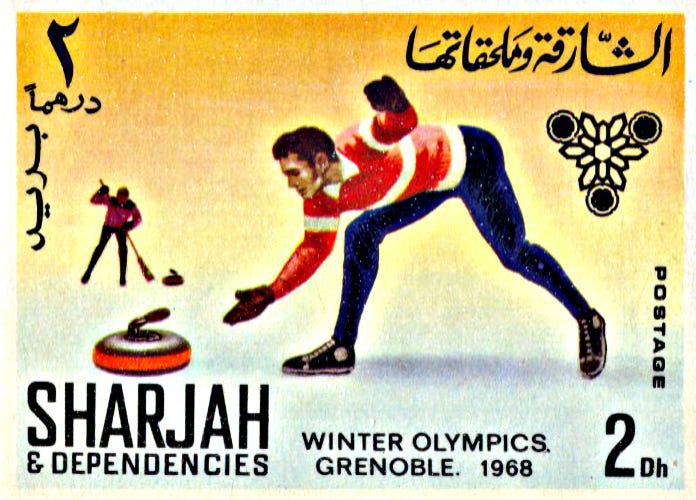
Two of the stamps show an athlete sledding down a track and the game of curling. Another on-again off-again event, sledding (or “skeleton,” as it’s called, because the first metal sleds, introduced in 1892, resembled such) was an Olympic event in 1928 and 1948, but remained absent from the games until it resurfaced again for the 2002 games, where it has since remained.
Curling was nowhere to be seen at the Olympics of 1968, having been a demonstration sport several times — 1932, 1988, 1992 — before becoming an official event in 1998.
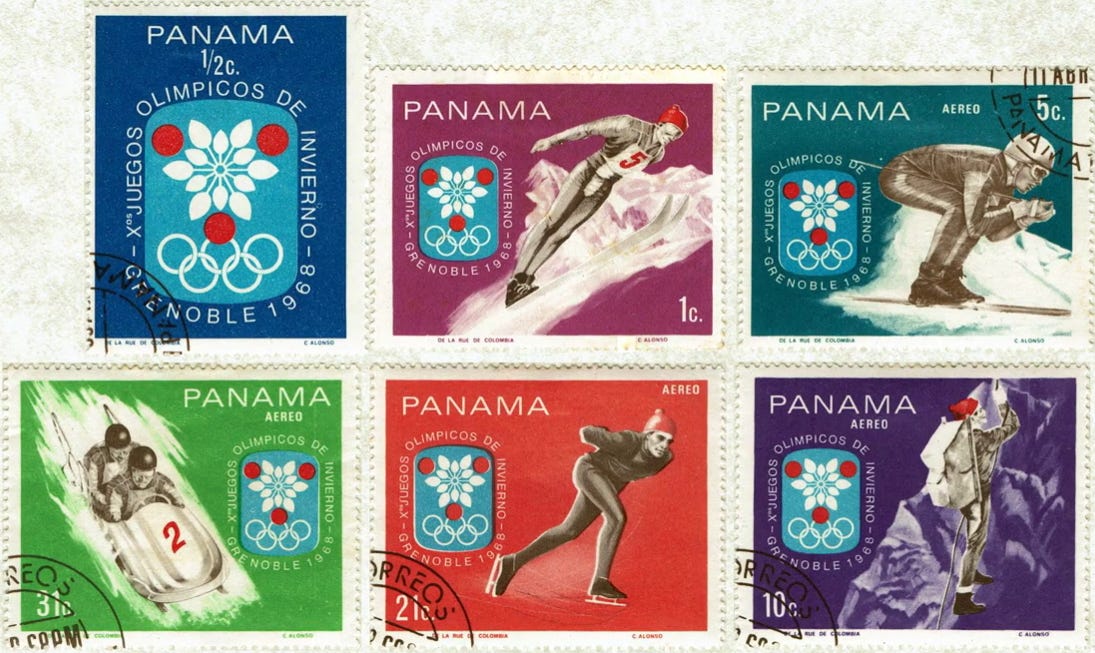
Panama’s 1968 contribution to “Olympics On Stamps” was a set of 6 including depictions of 5 winter sports. However, the last one shown, above . . .
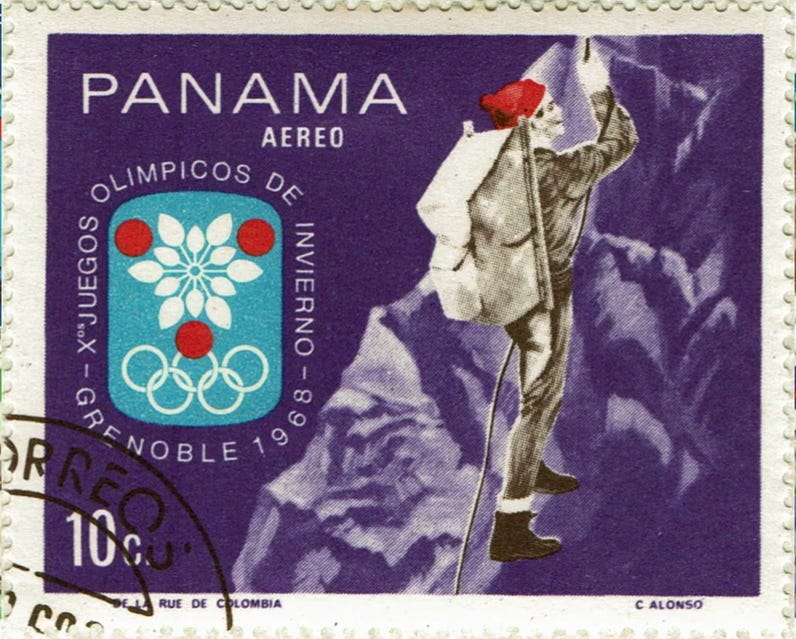
depicts Alpine Climbing, which was not an event in the 1968 games.
In fact, it has never been an official Olympic event, per se. But, in 1924, 1932, and 1936, Olympic medals were awarded, in conjunction with the respective Winter Olympic games, for the greatest mountaineering achievement during the preceding four years.
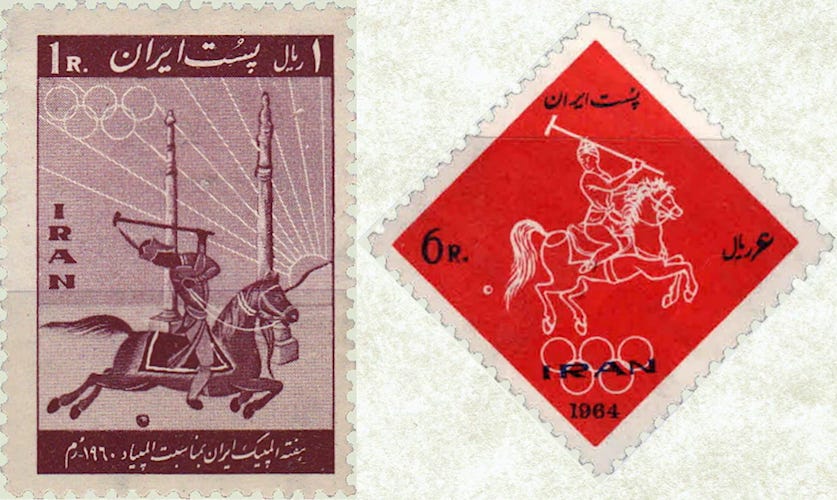
Iran issued a 1960 stamp for the non-existent Olympic sport of polo. Evidently, the non-existent Iranian team must have done so well that Iran featured the sport again on their 1964 Olympics issue.
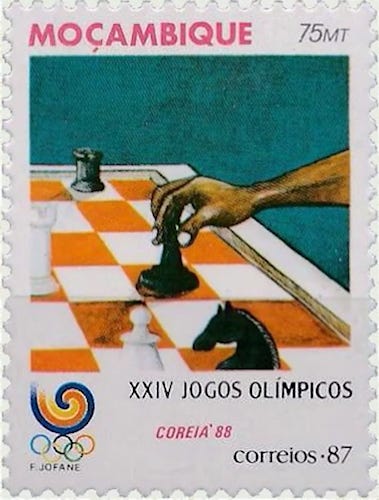
Now, while there is a biennial event called the Chess Olympiad, it has no connection with the International Olympic Committee, and chess has never made an appearance at an Olympics, Winter, Summer, or otherwise. Besides that, the designer got the chessboard scheme wrong — remember, “White is right.”
Here’s a stamp that has to make you wonder what the designer was thinking.
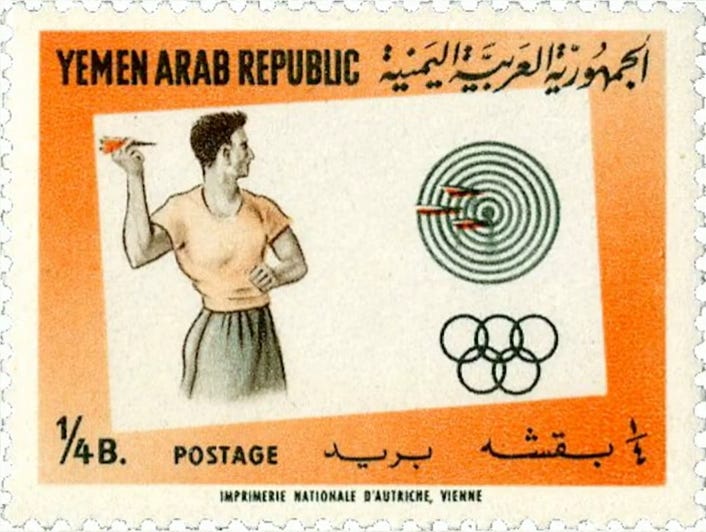
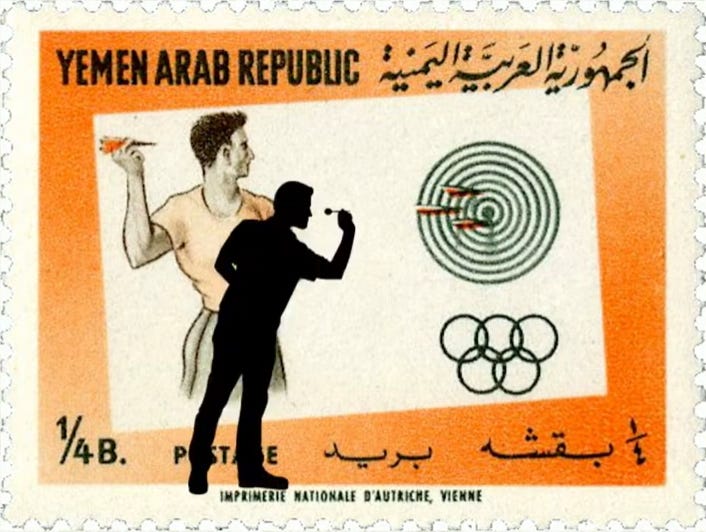
Not only is darts not an Olympic sport (nor ever has been), but that dart board looks more like a vinyl record album and the player looks as though he is about to launch a javelin. Here is the conventional stance for throwing a dart:
What is it with some stamp designers? For that matter, what is it with everyone in the stamp production chain? There are so many points where these gaffs should have been caught.
A stamp design is proposed and then approved.
A stamp essay of the design is created . . . and then approved.
A die proof is printed . . . and then approved.
Sheets are printed, inspected . . . and then approved.
Is everyone involved in the process unaware these sports do not exist in the Olympics?
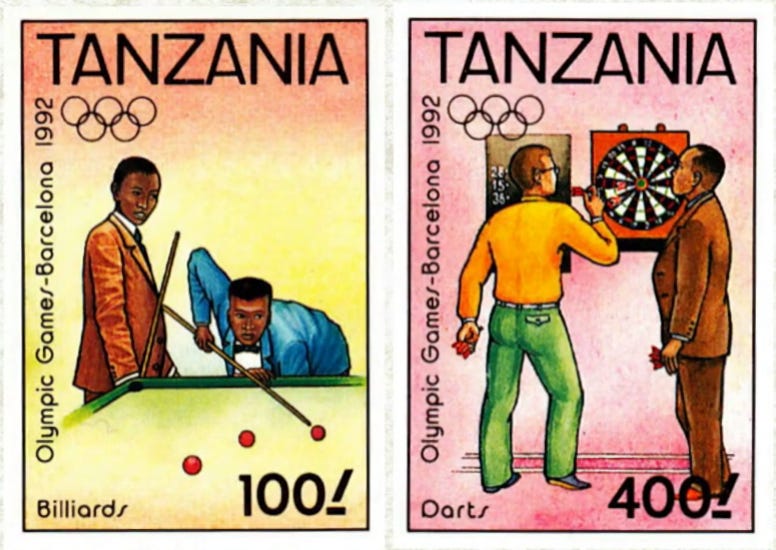
Tanzania issued a set for the 1992 Olympics that also included a stamp featuring Olympic darts. For good measure, they added a stamp for another non-Olympic sport, billiards.
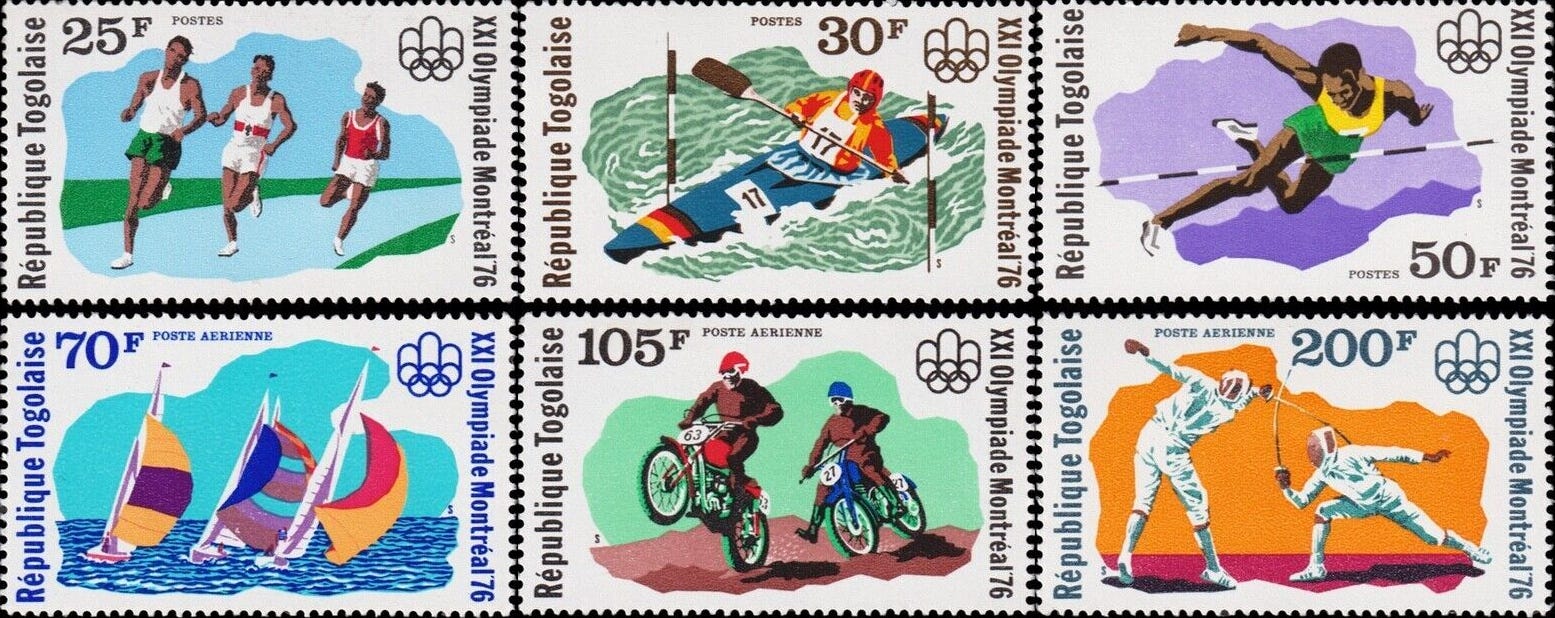
Togo makes an encore appearance on this list with this set issued for the Montreal Olympics of 1976.

To borrow from Peter Noone, “Second verse, same as the first.” To wit, this is not, nor has it ever been, an Olympic sport.
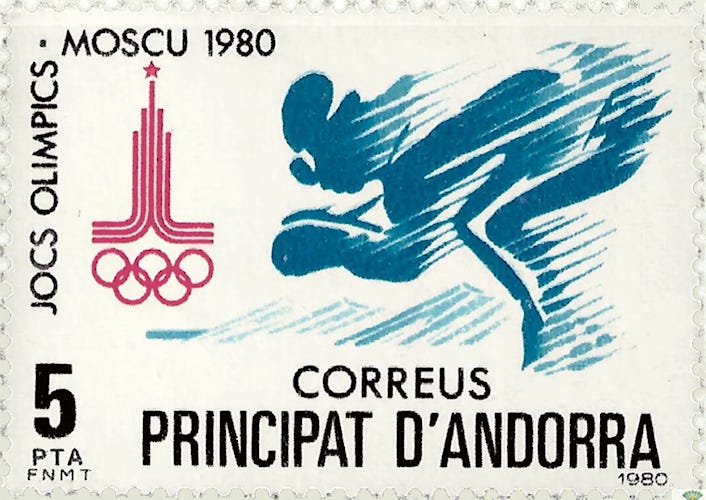
Here is one final example, which I will leave here without further comment, to be filed under, “Right church; wrong pew.”
Thanks for reading.
I once had a similar collection, based on the the book "Errors In Stamp Design". It is a fascinating topic and larger than one would expect. Related to your comment on the many hands that designs must pass through to be approved: the US issued C135 showing the Grand Canyon and originally labeled "Grand Canyon, Colorado". You would think that at least one of the many people who saw this design prior to printing would say, "I've been to the Grand Canyon, and I'm pretty sure it is not in Colorado." The error got caught and corrected after printing but before distribution.