
Beethoven On Stamps
What do you do when there is only one contemporary seated portrait of the man?

As a classical music topical collector, collecting stamps of composers can sometimes take on the feel of coin collecting. I made a short foray into coins many years ago but quickly grew bored of seeing page after page after page of coins with virtually identical designs. Of course, stamp collectors are not unfamiliar with this situation — think of the US Washington-Franklins.
So, too, with the stamps of composers who lived hundreds of years ago. With not a lot of contemporary paintings and drawings to . . . um . . . draw from, the stamps can take on a certain sameness, broken up only by other design elements on the stamps.
Take Beethoven, for example. The Lincoln penny of Beethoven stamp designs is the portrait of the composer painted by Joseph Karl Stieler in 1820, when the composer was 50 years old. It depicts Beethoven working on the score of his Missa Solemnis.
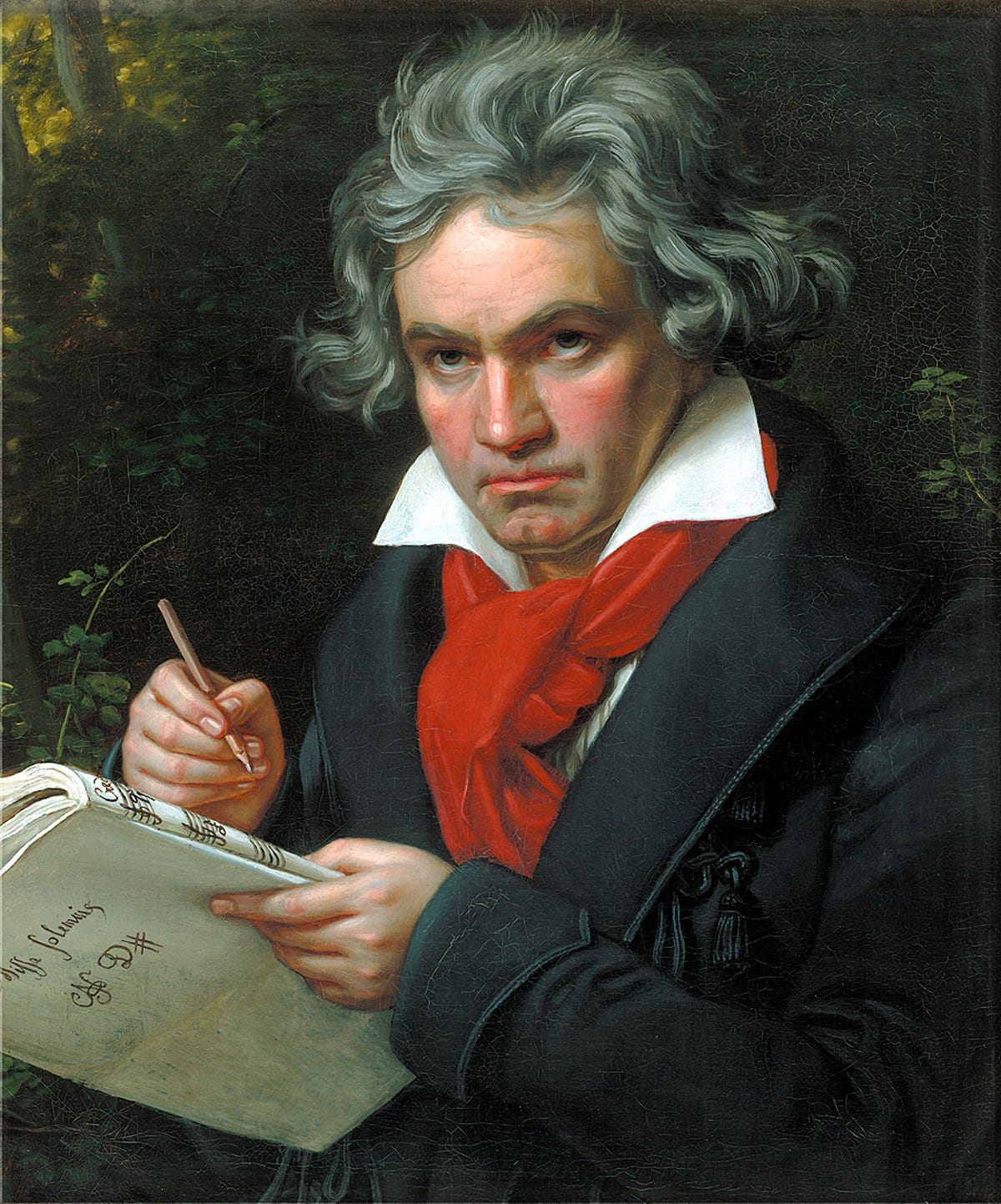
Below are shown just a few of the stamps which have been issued based on the painting.
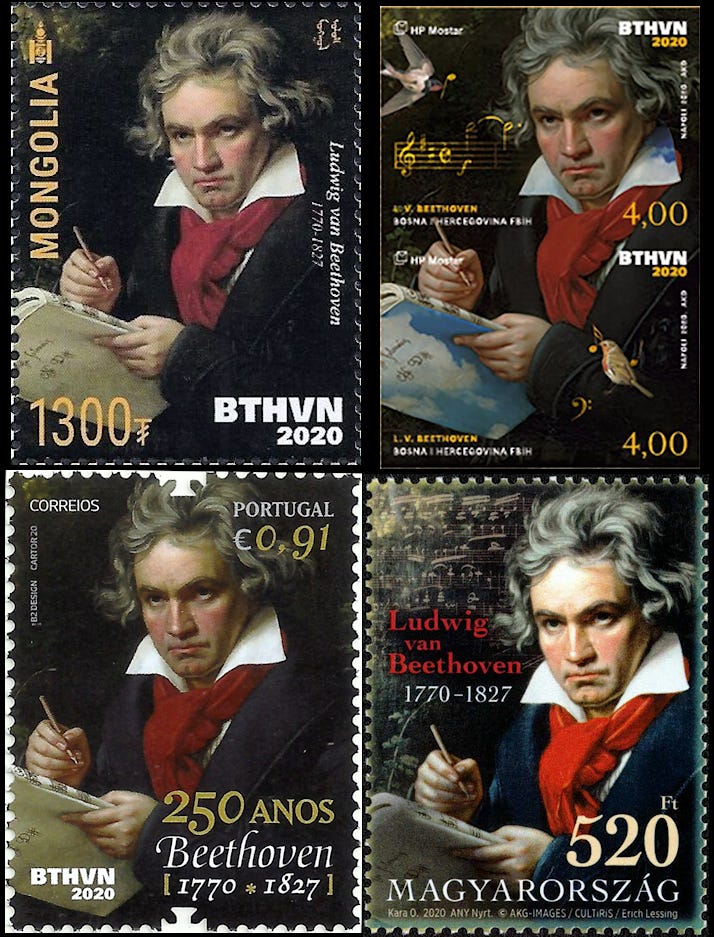
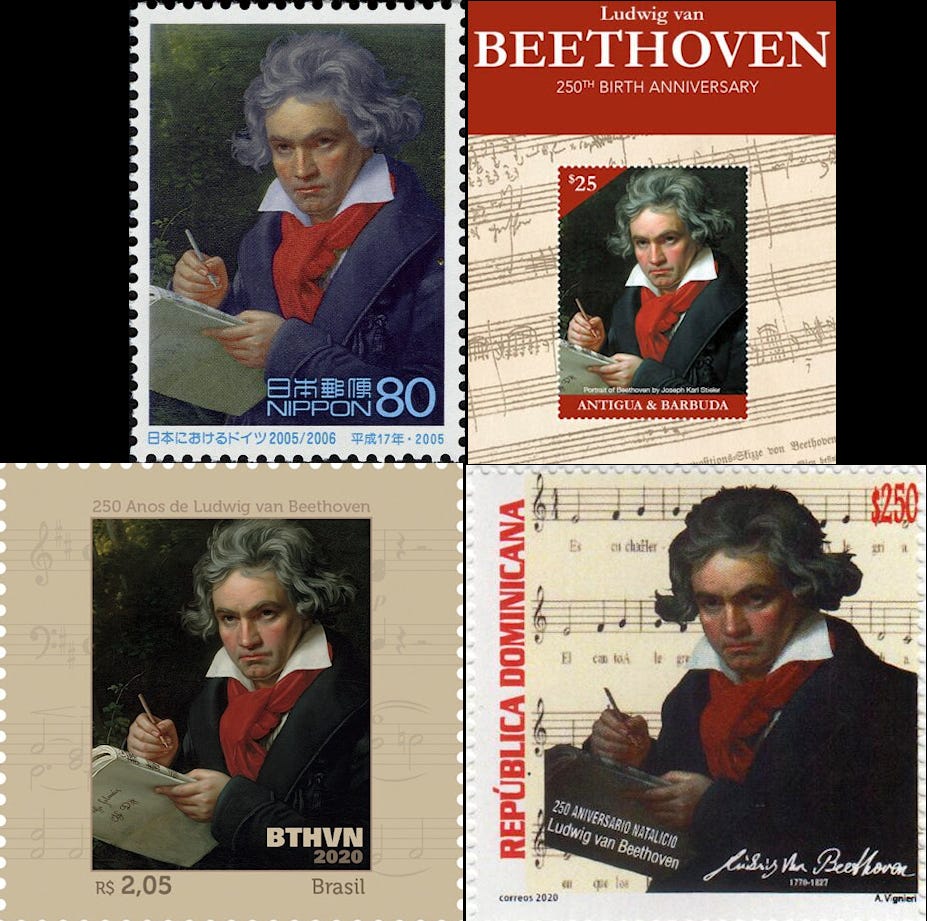
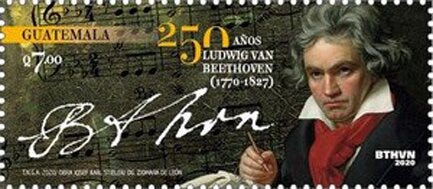
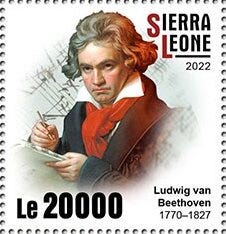
Not a lot of originality on display in those designs. Of course, one reason for the paucity of designs is the fact that this is the only known portrait for which Beethoven sat, during his lifetime. So, postal administrations have had to come up with their own ways to add a bit of variety. One way to do this was to make a tight crop of the image on the painting.
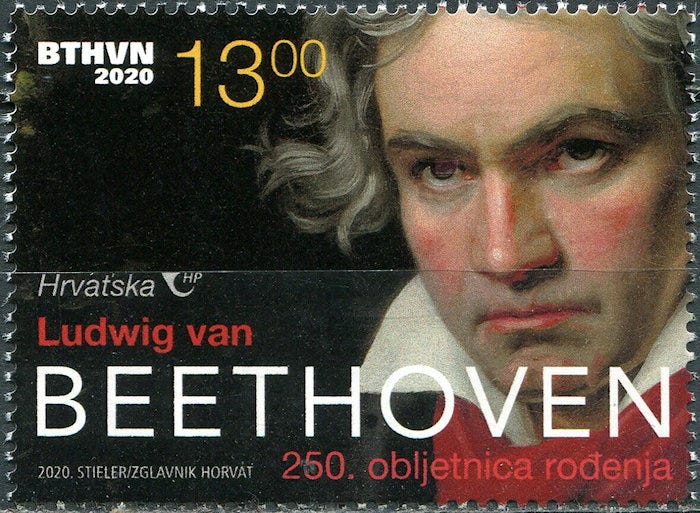
No, I mean really tight:
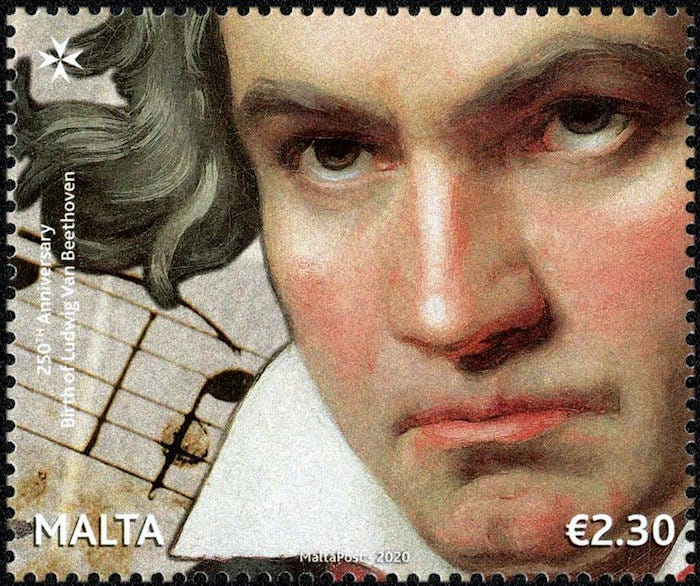
No one will ever guess this is from the same old painting, right?
Here’s an idea; let’s flip the image.

Or, change the color of his cravat.

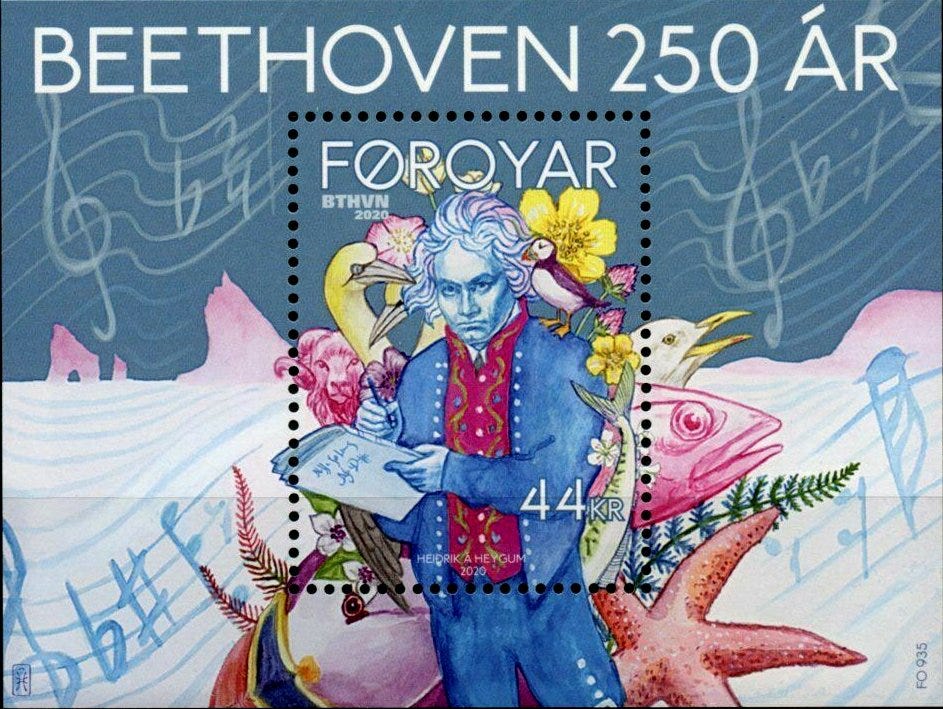
Maybe show Beethoven as he might have appeared in native costumery and surrounded by some of the local cultural iconography:
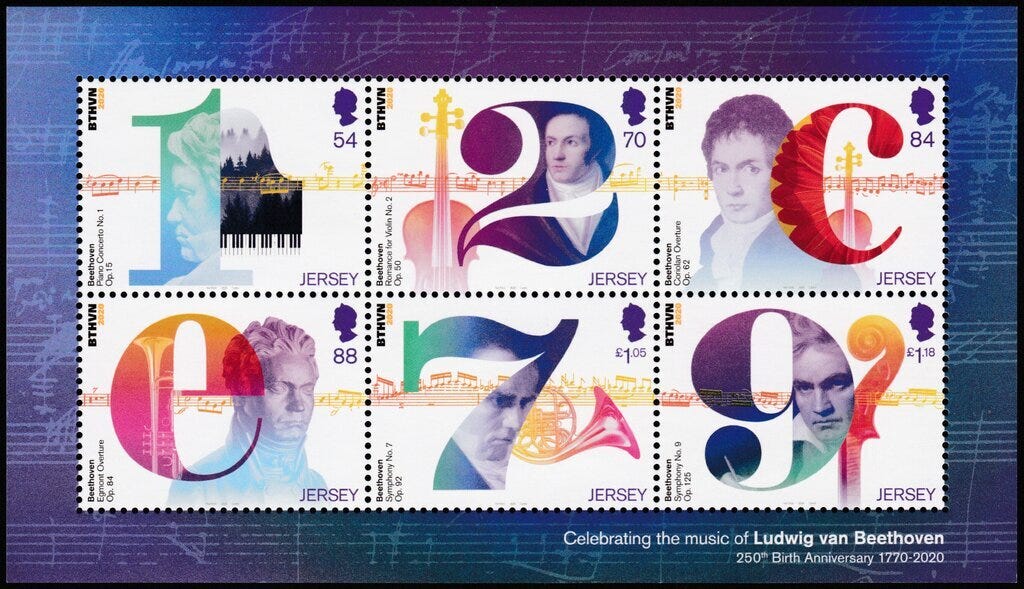
For Jersey’s 2020 commemoration of my main man Ludwig van, in avoiding the same old same old, Beethoven is all but lost within the graphical elements symbolizing some of his works — you can just make out the Stieler portrait within the “9” on the high value. In fact, as noted in the inscription, the sheet does not even commemorate Beethoven himself but, rather, his music.
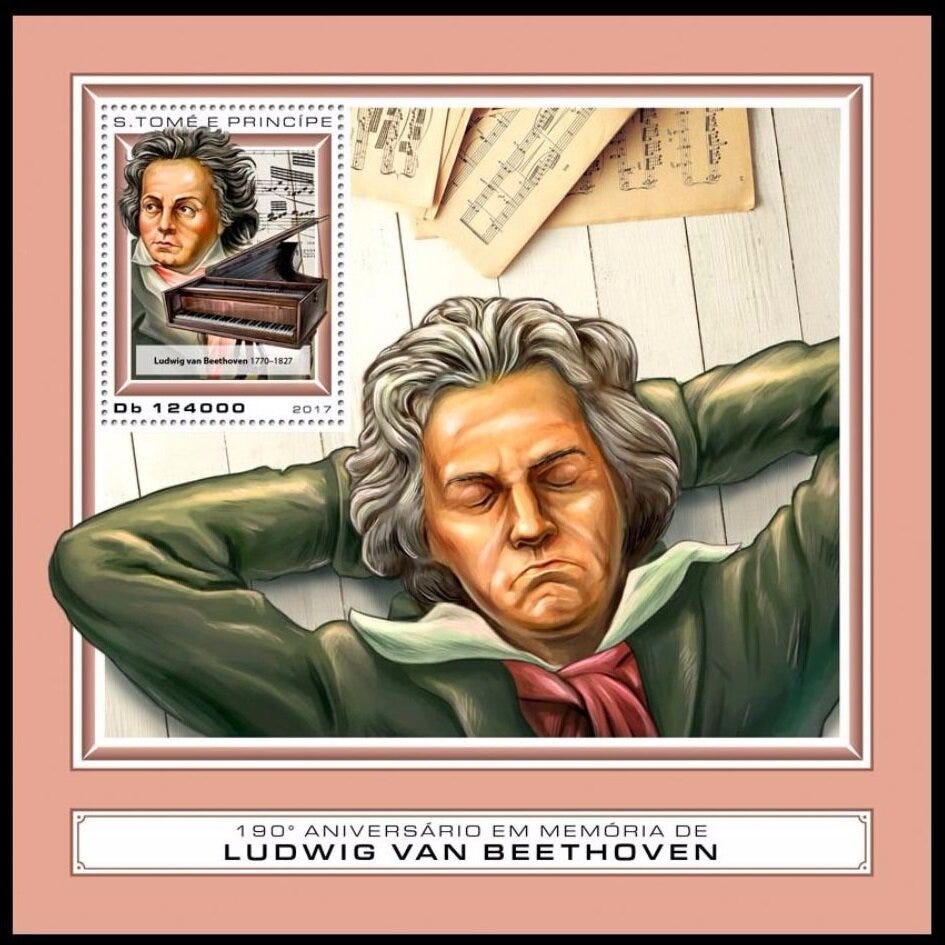
Now, granted, not every Beethoven issue draws on the Stieler painting for its design. There have been other paintings of his depicted on stamps. And in 2017, Sao Tome E Principe came up with one for a souvenir sheet which shows him chillin’ as he’s never been seen chillin’ before.
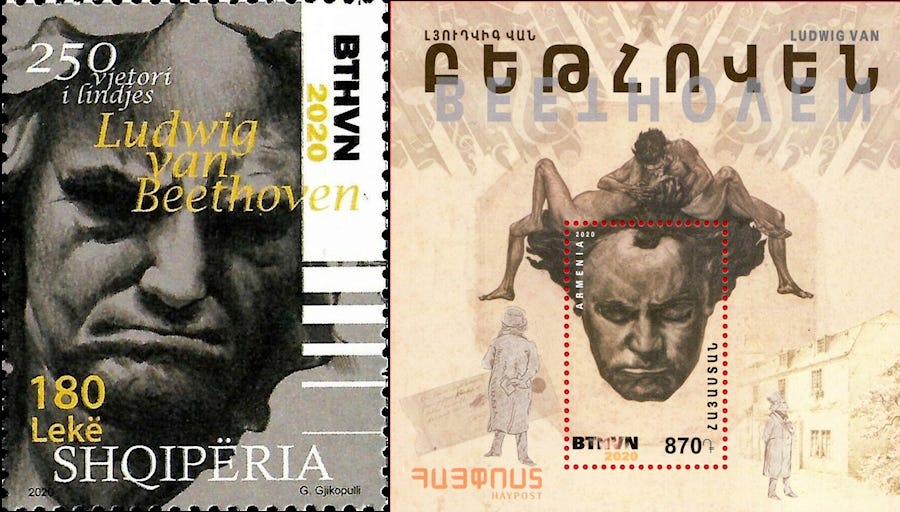
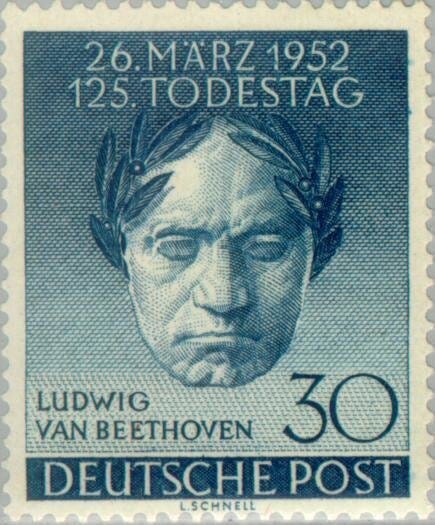
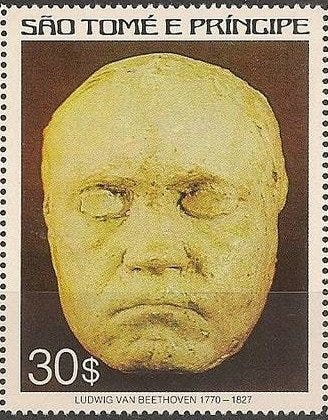
Some countries thought it might be a clever twist to celebrate the anniversary of his birth by showing him in death. These two, from Albania and Armenia depict Beethoven’s death mask. And what’s going on atop his head, on that Armenian stamp?
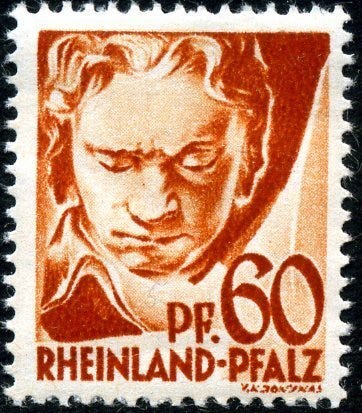
This depiction was not new with these two issues; there is precedent going back to 1947:
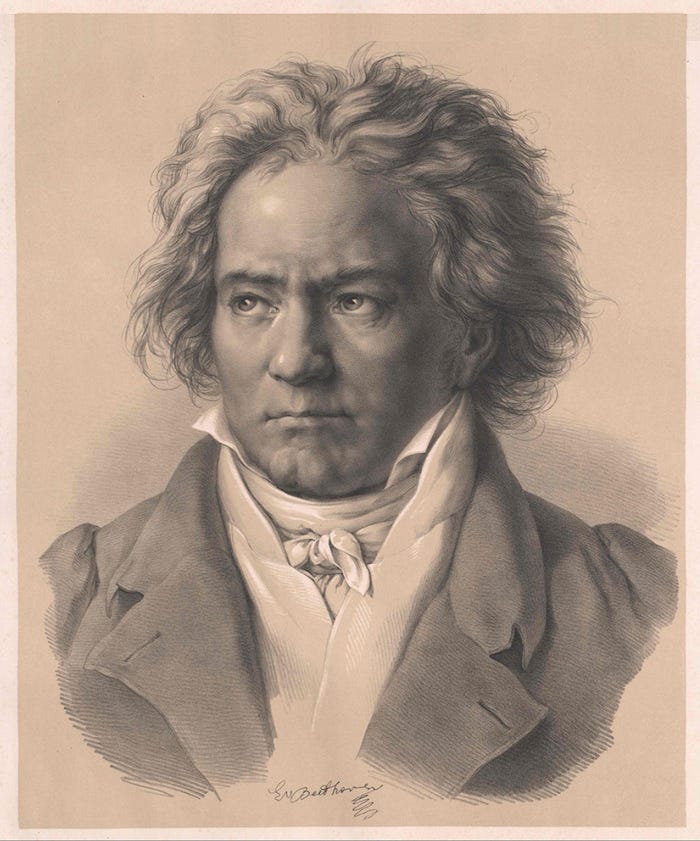
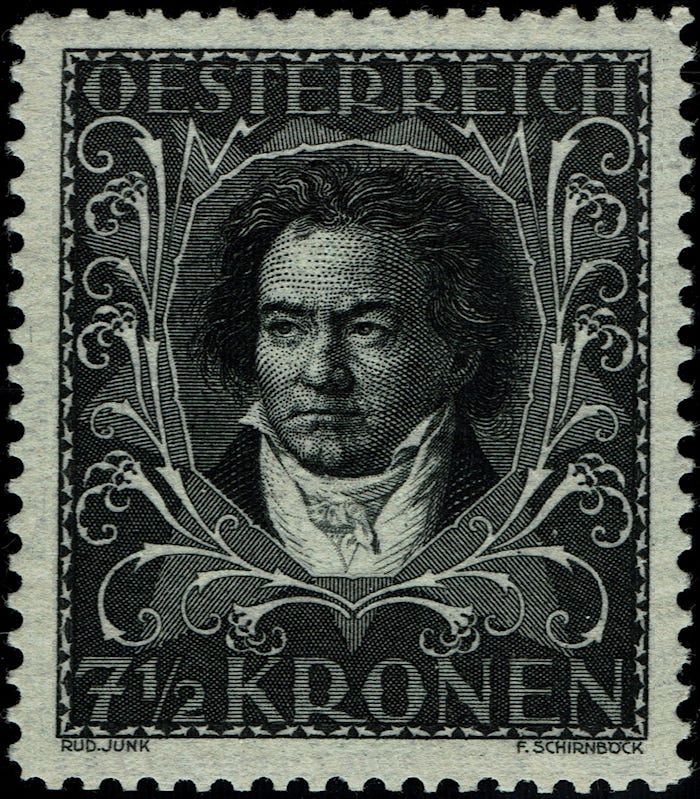
To be sure, the story of Beethoven on stamps is not all about the Stieler painting and the death mask. There are many paintings, drawings, and engravings which have been the source for designs on other Beethoven stamps, including this one, for which I have not been able to find the name of the artist, and which was the source for the first stamp to depict Beethoven — Austria, Scott Nr B52 (1922) — part of a 7-stamp set which was the first to show classical music composers.
Just as his music holds a special place in my heart, the stamps of Beethoven also hold a special place in my collection.